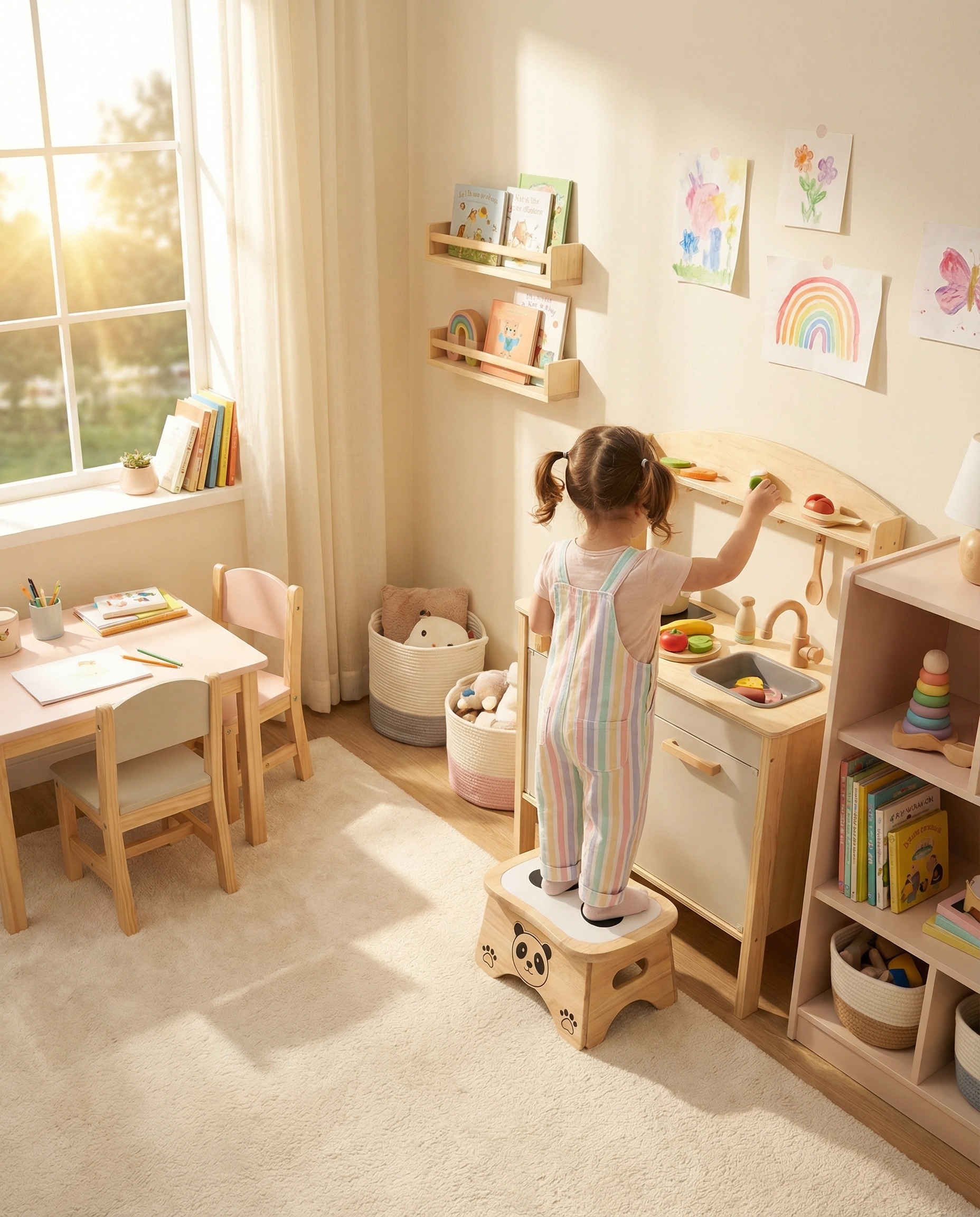
Transform Daily Routines: How Character-Based Kids’ Step Stools Make Self-Care and Kitchen Tasks Educational
Picture this: it's 7:30 AM, and instead of the usual tug-of-war over teeth brushing, your toddler is racing to the bathroom because their favorite character is waiting for them on their step stool, ready to guide them through every bubbly, splashy step. Sound like a fairy tale? It doesn't have to be. An educational step stool for kids — one built around characters and stories — can turn the most mundane daily routines into moments of wonder, learning, and genuine excitement. At Stobbi, we call it storification, and it's changing the way families experience mornings, mealtimes, and bedtime routines.
Why Daily Routines Are a Hidden Learning Goldmine
Young children repeat bathroom and kitchen routines multiple times every single day. That repetition is powerful. According to the Centers for Disease Control and Prevention (CDC), everyday activities are among the most effective contexts for building developmental milestones in toddlers and preschoolers — from fine motor skills to cognitive sequencing. The challenge? Kids often find these routines boring or resist them entirely.
This is where a kids step stool with characters flips the script. When the stool is a beloved character and has a story connected to the task at hand, brushing teeth isn't a chore — it's a chapter in an ongoing adventure. Research from the National Association for the Education of Young Children (NAEYC) shows that narrative-driven, play-based learning helps children internalize skills more deeply and retain them longer than instruction alone.
What Is Storification — and Why Does It Work?
Storification learning activities weave narrative elements — characters, plot, conflict, and resolution — into real-world tasks. Think of it as the storytelling cousin of gamification, designed specifically for how young minds absorb information.
The Science Behind Stories and Habits
Children are wired for stories. A study published in the journal Pediatrics by the American Academy of Pediatrics found that shared reading and narrative engagement in early childhood positively influence language development, social-emotional growth, and executive function. When you attach a story to a routine — "Let's help Doe the Turtle wash away the Germ Gremlins!" — you give the task emotional resonance and narrative stakes that a plain instruction ("Wash your hands for 20 seconds") simply can't match.
How Stobbi Brings Storification to Life
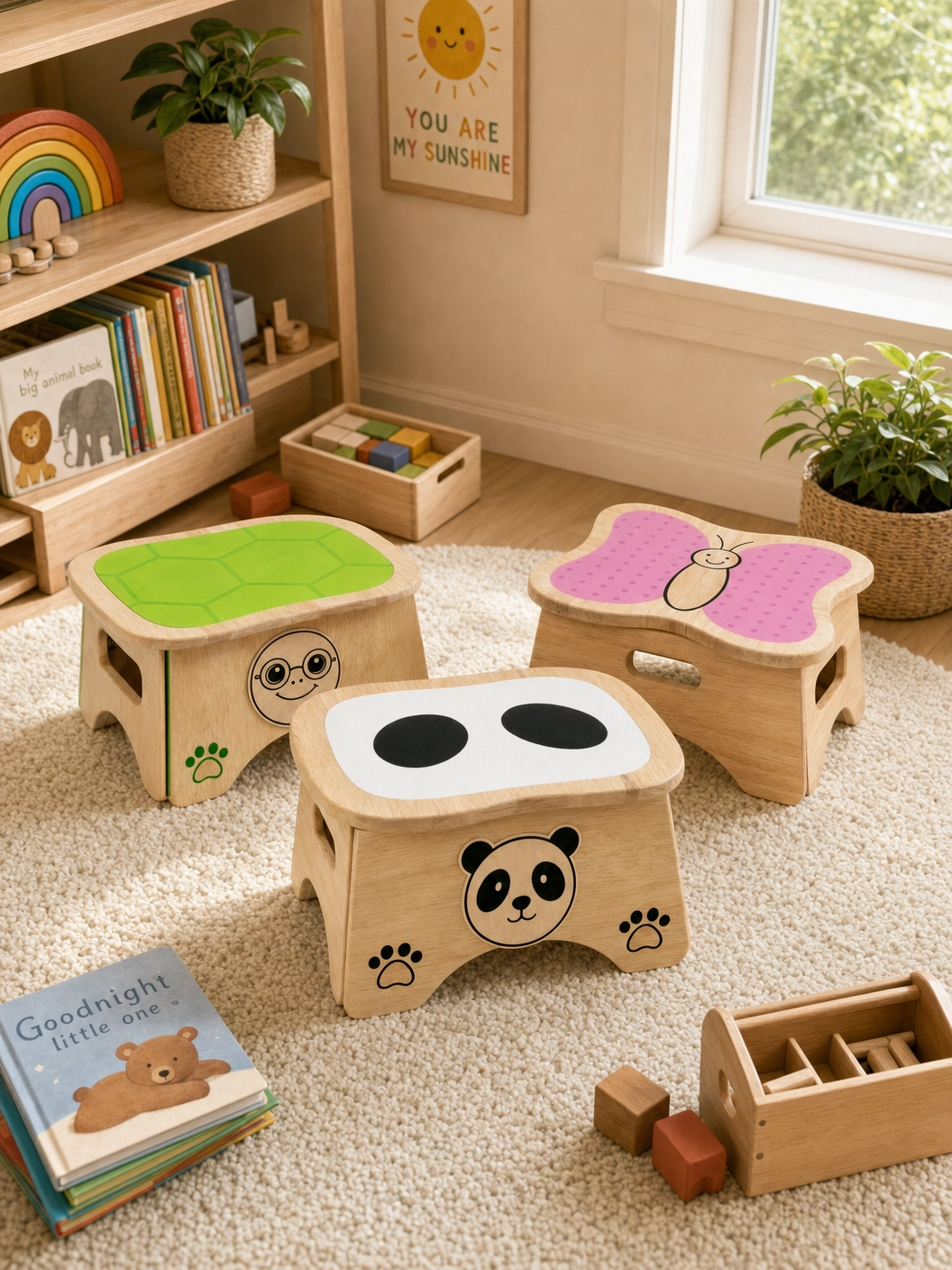
Stobbi's character-based step stools aren't just a platform to stand on. Each stool introduces children to a character world that connects directly to self-care and kitchen activities. Here's what that looks like in practice:
Bathroom routines: Characters guide kids through hand-washing steps, teeth-brushing sequences, and bathroom independence with visual cues and storytelling prompts built into the stool experience.
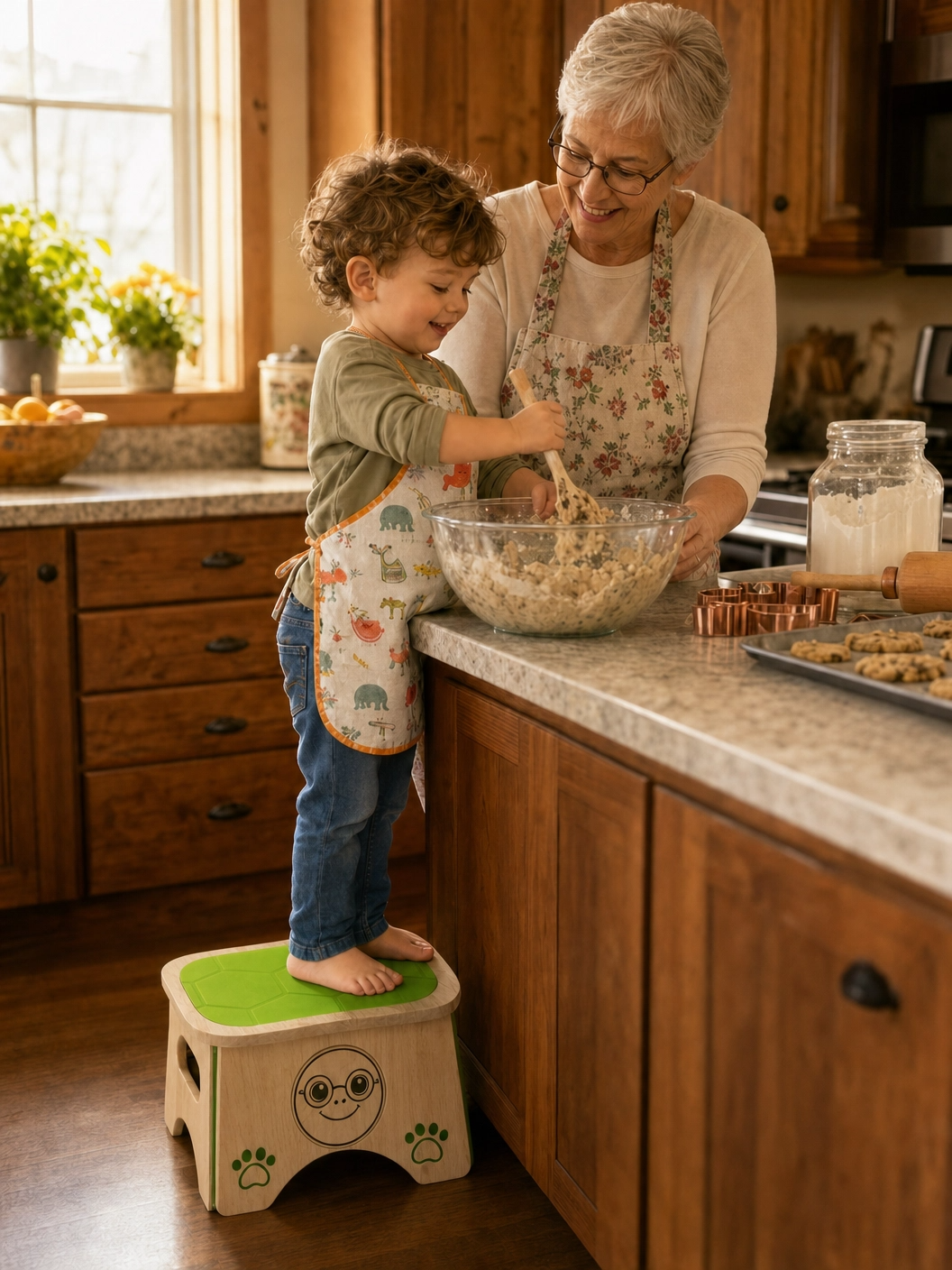
Kitchen participation: Characters encourage kids to help with age-appropriate tasks — stirring, pouring, rinsing vegetables — framed as "missions" or "adventures."
Emotional connection: Children develop ownership over their routines because their character is part of the journey, fostering pride and consistency.
Building Children's Independent Self-Care Routines — One Story at a Time
Independence doesn't happen overnight. It's built through small, repeated victories. A personalized or character-driven step stool gives toddlers the physical access they need to reach sinks, countertops, and shelves — and the emotional motivation to keep showing up. As noted by child development experts at Zero to Three, supporting children's independent self-care routines between ages one and three is critical for developing confidence, self-regulation, and a sense of competence.
Practical Tips to Maximize Your Educational Step Stool
Already have — or thinking about — an educational step stool for kids? Here's how to get the most out of it:
Create a character voice: Give the stool's character a silly voice or catchphrase. "Captain Ray the Panda says: Scrub between those fingers!" makes hand-washing an event, not an obligation.
Narrate the routine: Talk through each step as a mini-story. "First, we turn on the water — that's Doe the Turtle starting the river! Now we add soap — that's the magic bubble shield!"
Celebrate milestones: When your child completes a routine independently, let the character "celebrate" too. Sticker charts, high-fives from the character, or a new story chapter all reinforce positive behavior.
Rotate kitchen missions: Keep things fresh by assigning different "kitchen quests" each week — rinsing fruit on Monday, stirring batter on Wednesday. The character framework gives each task a narrative context.
Keep it safe and stable: The U.S. Consumer Product Safety Commission (CPSC) reminds parents to always supervise young children on elevated surfaces. Choose step stools with wide bases, non-slip surfaces, and rounded edges — safety fuels confidence.
More Than a Step Stool: Functional Educational Toys for Toddlers
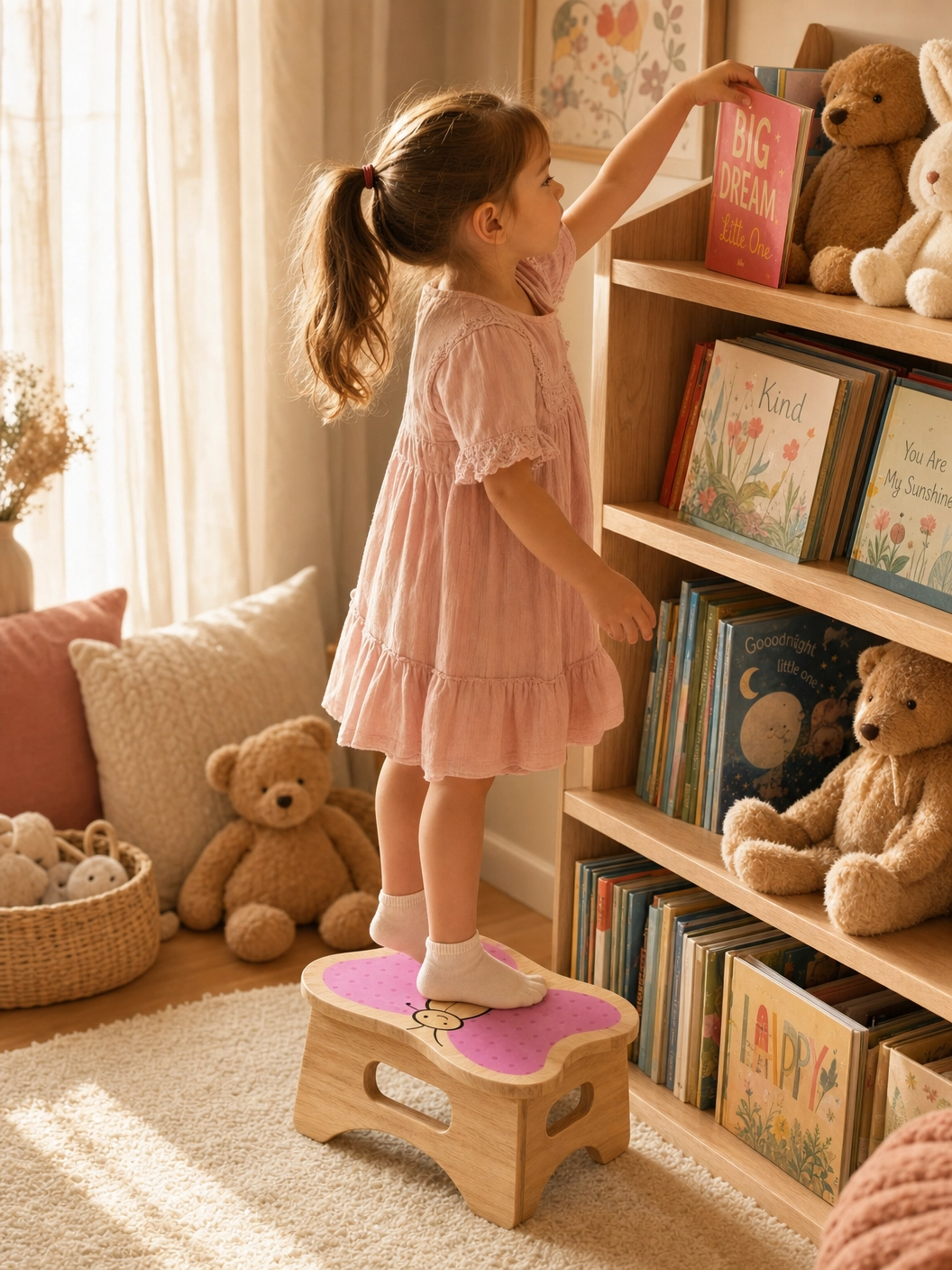
The best functional educational toys for toddlers don't collect dust in a toy box. They live inside daily life. A character-based step stool occupies a unique space: it's furniture, it's a learning tool, and it's a story companion all in one. Unlike a tablet app or a flashcard set, it exists in the physical world exactly when and where learning happens — at the bathroom sink at 7:30 AM, at the kitchen counter during dinner prep, at the bookshelf before bedtime.
That's the Stobbi difference. We believe that the most powerful learning moments don't require screens or special "lesson time." They happen when a child steps up — literally — and feels like the hero of their own story.
Ready to Turn Routines Into Adventures?
If you're tired of battles over brushing teeth and hand-washing standoffs, it might be time to invite a character into your family's daily routines. Explore Stobbi's collection of character-based educational step stools and discover how storification learning activities can transform your child's independence, confidence, and joy in everyday self-care. Make every routine an adventure worth repeating.
FAQ’s
-
An educational step stool for kids is a child-sized platform that helps toddlers safely reach sinks, countertops, and shelves while incorporating learning elements — such as characters, stories, or visual cues — into daily self-care and kitchen routines. Unlike a standard step stool, it is designed to engage children's imaginations and build skills like sequencing, independence, and hygiene habits through narrative-driven interaction.
-
A kids' step stool with characters motivates children to complete bathroom routines like hand-washing and teeth-brushing by connecting each step to a story or character mission. This narrative approach — sometimes called storification — gives the routine emotional meaning, making children more willing to participate consistently and independently. Characters serve as familiar "guides" that reduce resistance and increase engagement.
-
Most children can begin using an educational step stool for kids between 18 months and 2 years old, once they are steady on their feet and walking confidently. Adult supervision is essential at this stage. By age 3 to 4, many children can use step stools with greater independence for self-care tasks like brushing teeth, washing hands, and helping in the kitchen.
-
Storification is the practice of embedding narrative elements — characters, plotlines, and imaginative scenarios — into everyday tasks and learning activities. It works because children's brains are naturally wired to process and retain information through stories. When applied to routines like hand-washing or cooking, storification transforms repetitive tasks into engaging adventures that build cognitive, social-emotional, and motor skills.
-
Yes, when designed with safety features like wide non-slip bases, rounded edges, and stable construction, character-based step stools are safe for toddlers. Parents should follow guidelines from the U.S. Consumer Product Safety Commission by always supervising young children on elevated surfaces and choosing stools that are age-appropriate and weight-rated for their child.
-
Place the educational step stool at a kitchen counter and assign age-appropriate "missions" like rinsing vegetables, stirring ingredients, or pouring measured liquids. Frame each task as part of a story or character adventure to keep your child engaged. This approach builds fine motor skills, teaches kitchen safety basics, and gives children a sense of accomplishment and responsibility within family routines.