
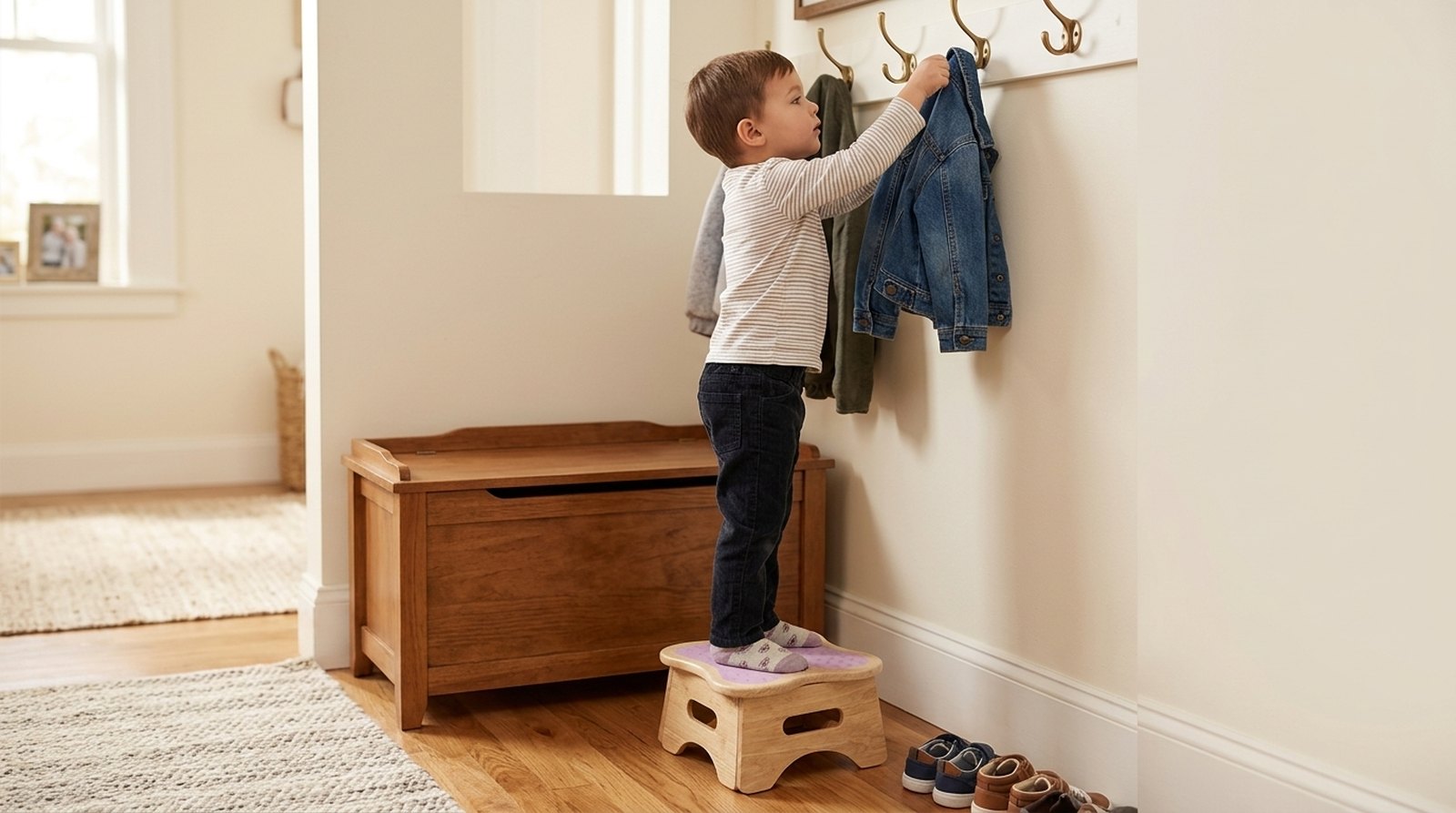
Montessori at home does not mean turning your house into a classroom. It means setting up the rooms your family already lives in so a child can take part in daily life: pour their own water, wash their own hands, hang up their own coat. Montessori educators call this a prepared environment, and the jobs themselves practical life. In most homes, the thing standing between a child and those jobs is reach. Here is how a step stool brings them up to it, room by room.
What does Montessori at home mean?
Maria Montessori built her approach around a simple observation: children want to do real things for themselves, and they learn by doing them. Montessori education at home borrows two ideas from the classroom. The first is the prepared environment, a space arranged so the child can find what they need, use it and put it back without help. The second is following the child, letting them choose and repeat the work that interests them while the adult watches, shows and steps back. The phrase most often used to sum it up is "help me do it myself."
None of this requires special furniture. It asks you to look at your home from your child's height.
What is Montessori practical life?
Practical life is the name for the everyday tasks of looking after yourself, looking after your surroundings and getting along with other people. In a Montessori classroom that includes pouring, washing, sweeping, dressing and preparing food. At home, the list is simply your household's own routines, done by the child alongside you. These jobs build coordination, concentration and confidence, and children tend to love them because they are real.
The kitchen
The kitchen has more practical life work in it than any other room. From a step stool at the counter and the sink, a child can rinse fruit and vegetables, tear lettuce, stir a bowl, pour water from a small pitcher into their own cup, set out plates and napkins, and wipe up after themselves. Keep their own cup, bowl and cloth in one place they can reach from the step stool, so getting a drink becomes something they do rather than something they ask for.
Stay close, keep the step stool away from the stove, and move sharp tools out of reach before your child steps up. If you are weighing a step stool against a larger kitchen helper, we compared them in Toddler Tower or Step Stool.
The bathroom
The bathroom is where most families start, because the routines happen several times a day. With a step stool at the sink, a child can wash their hands, brush their teeth and see themselves in the family mirror. With one at the toilet, they can get on and off without being lifted. The handwashing order is worth teaching out loud: step up, tap on, wet, soap, rub, rinse, tap off, dry, then step down. We covered the whole room in Montessori Bathroom Setup.
The entry
The front door is where a child practices getting ready to go out and settling back in. Practical life here means taking off shoes and putting them away, hanging up a coat and a bag, and fetching a hat on the way out. Rather than rearranging the hallway, keep a step stool by the door so your child can step up to the family coat hooks and hang their things next to yours. A basket for their own shoes, somewhere they can reach, completes it.
The bedroom and closet
Dressing is one of the big independence milestones, and the closet is where it starts. Offer two outfits and let your child choose. From a step stool, they can reach the closet rail to take down a shirt or hang one back up, open a drawer they could not see into before, and put worn clothes in the hamper. Pulling the comforter straight is practical life too. Keep their own clothes for the week together in one part of the closet they can reach from the step stool, so the choice is real and manageable.
The living space
In the shared rooms, practical life looks like caring for the space everyone uses. A child can water a plant, feed a pet with you, put books back on the shelf, carry their own toys to where they live and switch on a lamp. A step stool helps here too: at a light switch, at a shelf where the family keeps its books, at a window to look out. Fewer toys, rotated now and then, make putting things away a job a child can actually finish.
What makes a Montessori style step stool?
Montessori homes favor things that are simple, real and sized for the child to use on their own. A Montessori style step stool follows the same logic.
- The child can move it. Light enough to carry, with a carry cutout, so they bring it where they need it.
- The child can use it alone. A single height they can step up and down confidently by themselves once they are steady on their feet.
- Natural materials. Wood is a common choice in Montessori homes for the way it looks and feels.
- Steady underfoot. A wide base and a top that keeps small bare feet from slipping.
- Tested. To ASTM F2613, the US safety standard for children's chairs and stools, alongside CPSIA compliance.
Start with one room
Pick the room where your child asks for help most often, usually the bathroom or the kitchen, and set it up first. Show each job slowly, without many words, then let your child try. Then one day they will pour their own water, hang up their own coat and wash their own hands without being asked, because the home was ready for them.
Questions parents ask
What is a Montessori style step stool?
A simple step stool a child can carry and use on their own to reach the real sink, counter, closet and coat hooks, ideally in a natural material like wood, with a wide base and a top that keeps bare feet from slipping.
Do I need Montessori furniture to do Montessori at home?
No. Montessori at home is mostly about access. A step stool, a few of your child's own things within reach and time to let them try will cover most of it.
What are some Montessori practical life activities at home?
Pouring water, rinsing fruit, setting the table, washing hands, brushing teeth, dressing, hanging up a coat, watering plants and putting toys away.
How many step stools does a Montessori home need?
One that your child carries from room to room can be enough. Many families keep one in the bathroom and one in the kitchen so the daily routines never wait.
Where Stobbi fits
Stobbi makes step stools in solid natural wood, with a wide base and a carry cutout so they go from room to room. Mei the Butterfly, Doe the Turtle and Ray the Panda each bring a child up to wherever the day happens, room by room. See all three in the shop.